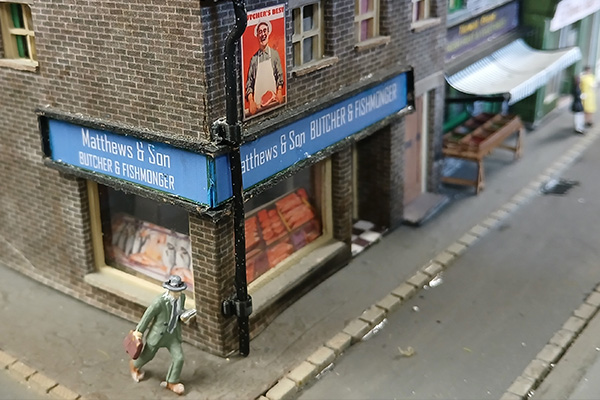
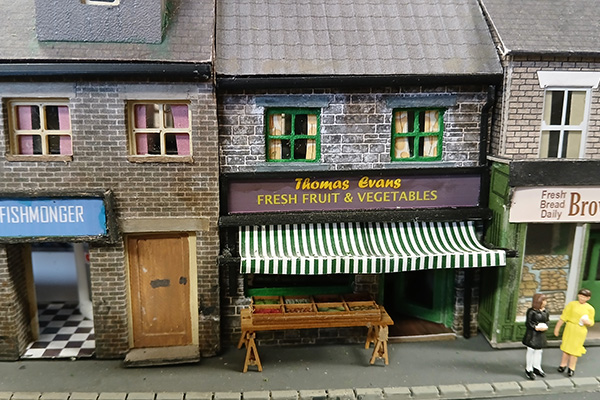
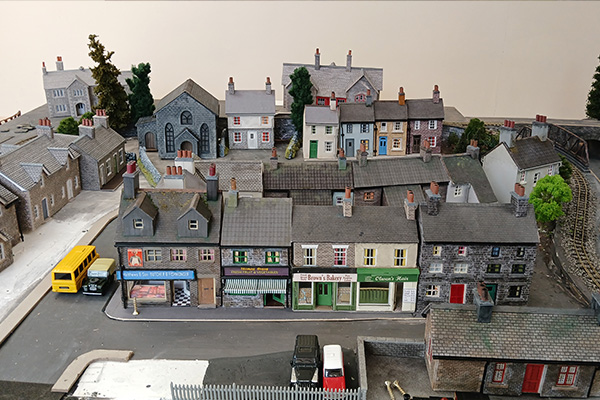
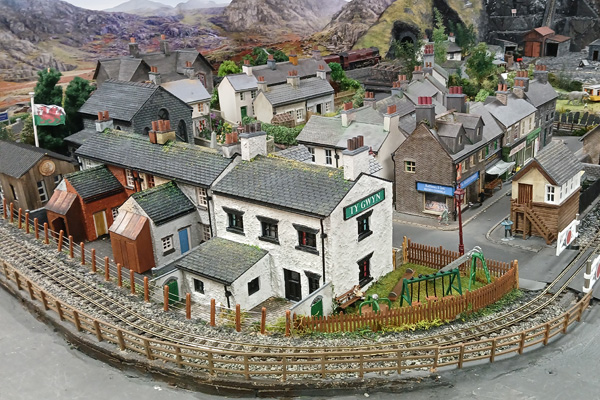
The shops were the first buildings made beyond simple houses.
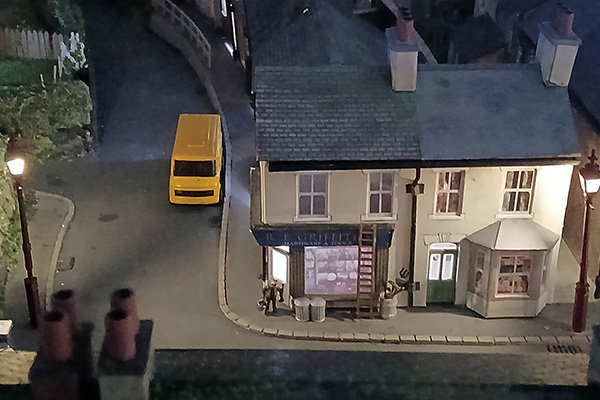
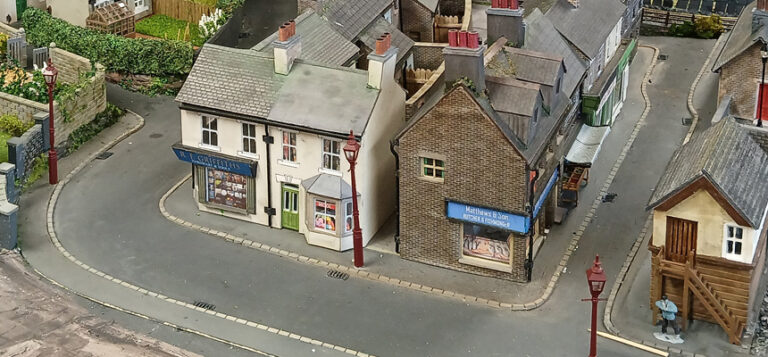
The corner cardboard shop was made into a hardware shop with photos of a typical hardware shop inside the windows, and would eventually have a few sale items on the pavement outside. Both the new shops opposite the station car park had inside modelling with open doors so that customers could possibly be placed inside.
Other smaller shops were a hairdresser and bakery, and of course, every Welsh village had a wool shop.
Chapel
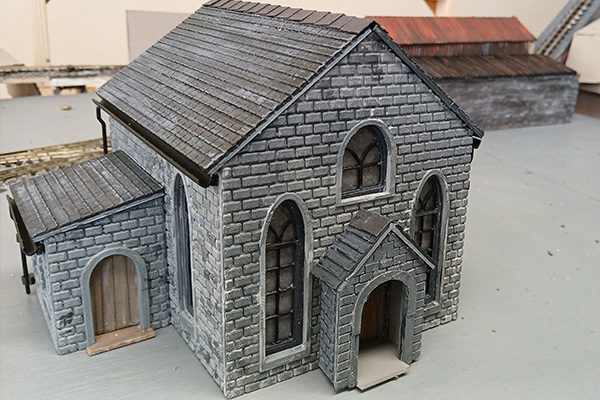
The chapel was based on two existing chapels from the area. This was the first building to have printed texture on the walls and roof tiles.
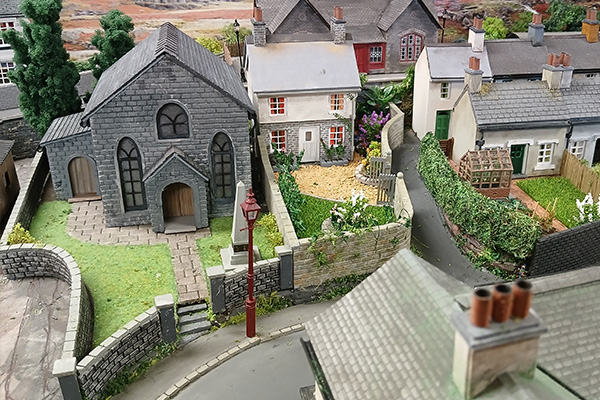
All the walls have large stone bricks and there are tall windows on the sides as well as the front. The glazing has tracing paper behind to give a frosty appearance – to hide the absence of rows of pews etc!
The grounds have card paving, grass and a war memorial. The curved walls were made by heating the printed double-sided plastic brick walls around a former in a bowl of hot water, to get exactly the right shape. The curve on the left is for the footpath to the Scout hut and steps to the foot crossing over the train track. Inside the chapel are lights and a good quality speaker for when the choir are singing in the concert.
Roads
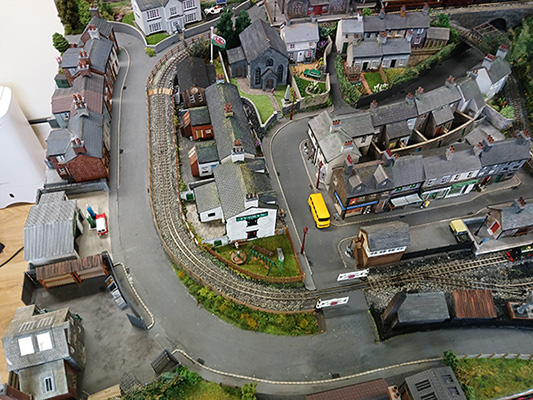
The roads were needed early so we could fix the general village layout. The basic road was laid out setting the levels, and marked out with paint, but the detailed path needed to be set along with positioning the buildings, so it all worked together. The finishing elements, such as pavements, kerbs and drains would be added later. The structure was a ground layer of polystyrene with a thin layer of plaster on top. This made painting easy, and also would enable the street drains to be set in.
Eventuallly there were several roads and walk-ways aroud the village
Walls and fences
We needed both curved and straight walls and fences, so started with buying bendable fences. The long wall along the road under the metal bridge had two layers of thin printed brickwork so that it could be slightly curved.
I soon realised that any fencing that I could print would be thin enough to bend and so I could make a variety of styles of railings, wooden fences and post and wire fences.
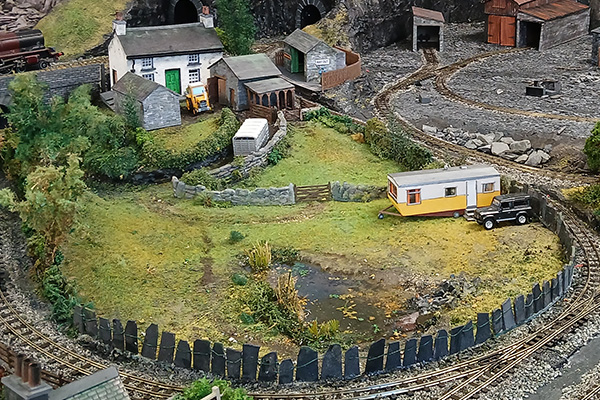
The exceptions to printing were a slate fence in the farm area as seen in many of the mining areas, and a stone wall made from clay on the farm.